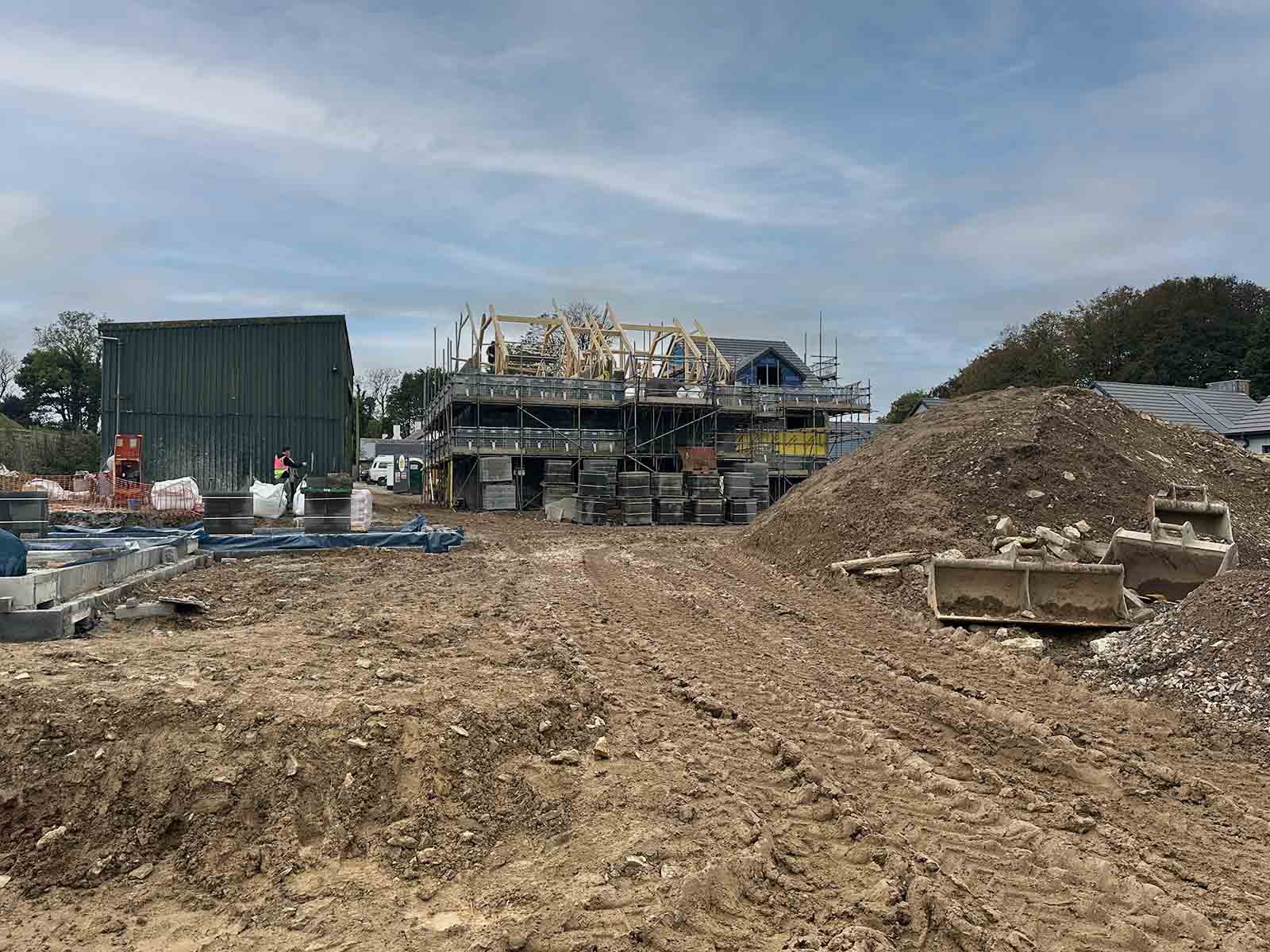


When people think about property development, it's often the construction phase that gets the most attention.
Cranes arrive on site. Groundworks begin. Buildings start to take shape. Progress becomes visible.
But some of the most important decisions in a development project happen long before anyone steps onto site.
The decisions made during the early stages can influence everything that follows, from the viability of the scheme and the construction budget to the planning strategy, funding requirements and eventual return on investment.
For developers, investors and landowners, this means that successful development is not simply about building well. It is about making the right decisions before construction begins.
The Importance of the Early Stages
A development project can take months or even years to progress from an initial opportunity to completed construction.
During that time, there are countless decisions to make.
- Should the site be purchased?
- What can realistically be built?
- Will planning permission be achievable?
- What will construction cost?
- What is the potential end value?
- How will the project be funded?
- What are the biggest risks?
- And, ultimately, does the project make commercial sense?
Answering these questions early provides developers with the information they need to decide whether to proceed, change the approach or walk away from an opportunity.
That last decision can sometimes be the most valuable one.
Start With the Opportunity, Not the Building
It can be tempting to start thinking about what a site could look like before understanding whether the proposed development is viable.
A more strategic approach starts with the opportunity itself.
This means assessing:
- Location
- Site characteristics
- Planning context
- Development potential
- Local market conditions
- Likely construction costs
- Potential Gross Development Value
- Funding requirements
- Overall project risk
A site may have significant development potential but still be commercially unattractive once the full costs and risks have been considered.
Conversely, an apparently modest opportunity may offer strong returns if it is approached with the right strategy.
The key is understanding the numbers and constraints before committing significant capital.
Feasibility Should Come Before Commitment
One of the most important stages of any development is the feasibility assessment.
A development appraisal provides an opportunity to test the project before substantial expenditure begins.
This can involve assessing:
- Acquisition costs
- Construction costs
- Professional fees
- Finance costs
- Planning considerations
- Contingency
- Expected sales or rental values
- Potential development profit
At Bayview Projects, Development Feasibility & Appraisal is designed to give clients an independent view of whether a proposed scheme is commercially viable.
This can be particularly valuable for investors considering whether to acquire a site, developers assessing alternative schemes, or landowners exploring the potential of their property.
The purpose isn't simply to produce a spreadsheet. It's to provide a basis for better decisions.
Design Decisions Have Commercial Consequences
The design of a development isn't just about appearance.
Every design decision can have implications for cost, programme, planning and future value.
For example, increasing the size or complexity of a building may increase its potential end value, but it may also introduce:
- Higher construction costs
- Longer programmes
- Greater planning risk
- More complex structural requirements
- Increased professional fees
Similarly, reducing costs through design or specification changes may improve the initial budget but could affect marketability or long-term value.
Successful development requires these factors to be considered together.
The best design isn't necessarily the most ambitious. It is the one that achieves the right balance between quality, cost, planning, market demand and commercial return.
Risk Management Starts Before the Site Does
Every development carries risk.
Some risks are obvious. Others only become apparent once detailed investigations begin.
Potential issues can include:
- Poor ground conditions
- Access restrictions
- Drainage requirements
- Utility constraints
- Planning objections
- Environmental considerations
- Existing structural problems
- Construction cost increases
- Contractor availability
The earlier these risks are identified, the more opportunity there is to manage them.
This is one of the key advantages of undertaking thorough due diligence before committing to a project.
It allows developers to ask not only "What could go wrong?" but also "What can we do about it?"
Building a Realistic Budget
A successful development needs more than an attractive financial appraisal.
It needs a realistic one.
Construction budgets should reflect the actual characteristics of the project rather than relying solely on generic cost-per-square-metre figures.
Factors such as specification, site conditions, access, complexity, location and procurement strategy can all influence the final cost.
At Bayview Projects, Cost & Risk Assessments help clients identify potential gaps, assumptions and areas of uncertainty within project budgets.
This early scrutiny can highlight issues before they become expensive problems.
Planning Is Part of the Development Strategy
Planning should not be treated as an administrative hurdle that sits between acquisition and construction.
It is a fundamental part of development strategy.
Understanding the relevant planning policies, site constraints and potential development parameters at an early stage can influence whether a scheme is worth pursuing in the first place.
For some projects, statutory agreements and infrastructure requirements can also have a significant impact on cost and programme.
A development strategy should therefore consider planning from the outset rather than treating it as something to address later.
Think About Delivery Before You Finalise the Scheme
A project can look excellent on paper but still be difficult to build.
Construction methodology, procurement, site logistics and programme should all be considered during the design and planning process.
Questions worth asking include:
- How will the site be accessed?
- Can materials be delivered efficiently?
- Are there constraints on working space?
- What construction methods are appropriate?
- How complex will the programme be?
- Are specialist contractors required?
- What could delay construction?
Considering these issues early can influence design decisions and reduce problems during delivery.
The Value of Independent Advice
Property development involves significant financial commitments, particularly when land, construction and finance costs are considered together.
Having an experienced, independent advisor involved early can provide a valuable additional perspective.
An independent consultant can challenge assumptions, identify risks and help ensure that decisions are based on the overall objectives of the project rather than individual interests.
At Bayview Projects, our approach combines practical construction experience with commercial development knowledge.
Our founder, Brian Waudby MCIOB, began his career on site as a labourer and carpenter before progressing through Site Foreman, Site Manager and Project Manager roles into property development and strategic project leadership. This experience provides a practical understanding of what is required to take a project from an initial opportunity through to successful delivery. (bayviewprojects.co.uk)
That perspective can be particularly valuable during the early stages, when decisions can still be changed relatively easily.
The Earlier the Decision, the Greater the Influence
One of the fundamental principles of successful development is that decisions made early tend to have the greatest influence over the eventual outcome.
Once construction begins, changing course becomes increasingly expensive.
Changing a design during construction can result in variations.
Discovering an overlooked site constraint can cause delays.
Identifying a budget shortfall after contracts have been agreed can create significant financial pressure.
By contrast, identifying these issues during feasibility or pre-construction gives the developer far more options.
Early investment in professional advice can therefore provide significant value by reducing uncertainty before it becomes expensive.
Construction Is the Result, Not the Starting Point
A successful development doesn't begin when the contractor arrives on site.
It begins when the opportunity is first assessed.
The strongest projects are built on:
- Clear objectives
- Robust feasibility
- Realistic financial modelling
- Thorough due diligence
- Effective planning
- Appropriate design
- Structured risk management
- A clear delivery strategy
- The right professional team
When these foundations are in place, construction becomes the next stage of a well-considered strategy rather than the point at which the strategy is finally developed.
Final Thoughts
Property development is ultimately about making decisions.
Some decisions are made before a site is purchased. Others are made during planning, design and procurement. Construction is where those decisions are put into practice.
The more thoroughly the early stages are considered, the greater the opportunity to identify risks, improve viability and create a project that can be delivered successfully.
At Bayview Projects, we support developers, investors and landowners from the earliest stages of the development journey, providing practical advice across feasibility, appraisal, cost and risk assessment, statutory agreements and client-side project oversight.
Our role is not simply to help clients build.
It is to help them understand what they are building, why they are building it, what it is likely to cost and how it can be delivered successfully.
Because the best time to solve a construction problem is usually before construction starts.